Beyond Share of Voice: Nine Things AI Visibility Should Tell You

Jim Wrubel
10/6/2026

A lot of people call AI visibility tools "prompt trackers." That's fair as far as it goes. You pick the questions buyers ask, run them against ChatGPT, Gemini, and Google AI Overviews every day, and count how often your brand shows up. Mentions and share of voice are the baseline. Any serious platform should have them, and we'd never tell you to skip them.
But the label sells the category short. AI answers have become a place where customers find products, compare options, and decide who's worth a closer look. That makes them a discovery channel, and you can learn a lot more from a channel than how often your name comes up. A good AI visibility platform tells you why you show up, what AI says when you do, which sources shape the answer, and what to fix next.
Below are nine signals that go past mentions and share of voice. The examples use a made-up outdoor brand, Acme Outdoor Co., and its made-up rivals. Every number in them is an illustration, not a finding.
Key takeaways
- Mentions and share of voice tell you where you stand. The signals behind them tell you why you're there and what to change.
- Grounding searches show the web searches AI runs before it answers, which turns AI visibility into an SEO target you can work on.
- Citation source mix and "best for" shortlists show where PR and SEO should spend, and how AI positions you against rivals.
- Negative messages, wrong-domain consultations, and crisis watch catch problems in AI answers before buyers act on them.
- Executive, category, and rebrand tracking point the same approach at people, whole markets, and name changes.
Grounding searches
Before ChatGPT answers a buying question, it often searches the web first. Those searches are called grounding searches, or fan-out queries. The model picks results it trusts, reads them, and builds the answer from what it read. If you don't rank for the searches it runs, you're unlikely to make it into the answer.
Say a shopper asks ChatGPT, "Best hiking boots for wide feet?" Behind the scenes it might search "wide toe box hiking boots," "best wide hiking boots 2026," and "waterproof boots wide fit." In this example, Acme ranks #3 for the first one, #14 for the second, and doesn't rank at all for the third.
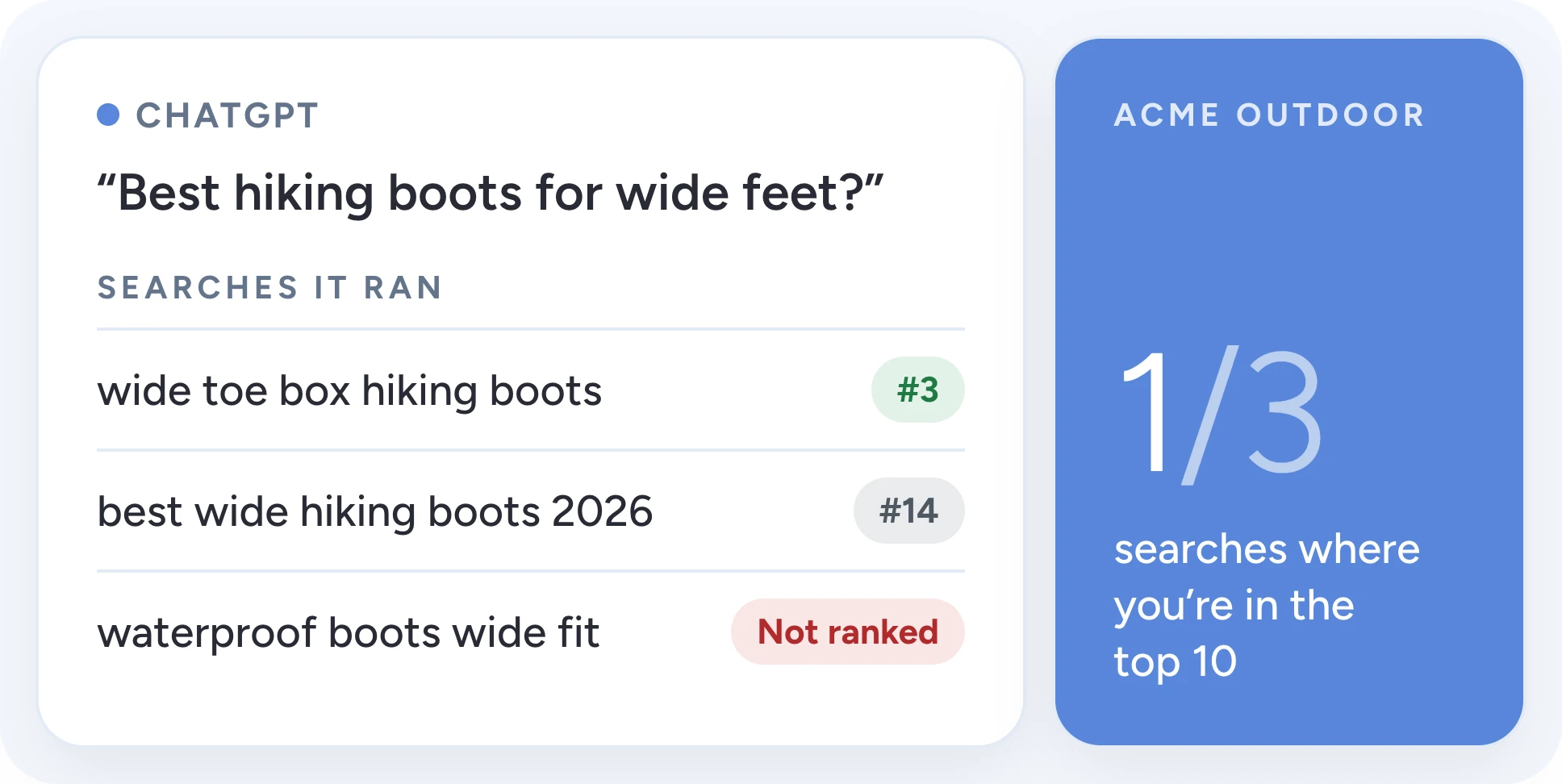
The question this answers: which searches decide the answer, and where do you stand in each one? You can't control what AI writes. You can work on where you rank for the searches it runs. Pick the gaps that matter most, then improve or write the page that should win each one. Here's how to win a target grounding search.
Citation source mix
Every AI answer leans on sources. Some are news and review sites. Some are your own pages. Some belong to competitors. Some are forums and community threads. The rest is everything else, from directories to retailer listings.
The mix tells you who AI listens to on your topics. In this example, news and review sites lead for wide-fit boot questions, and only a small slice comes from Acme's own site. If most citations come from review sites like Trailhead Review and Basecamp Gear Guide, earned media is your lever. If forums lead, community presence matters more. If your own site barely shows up, your pages either aren't getting read or aren't getting picked.
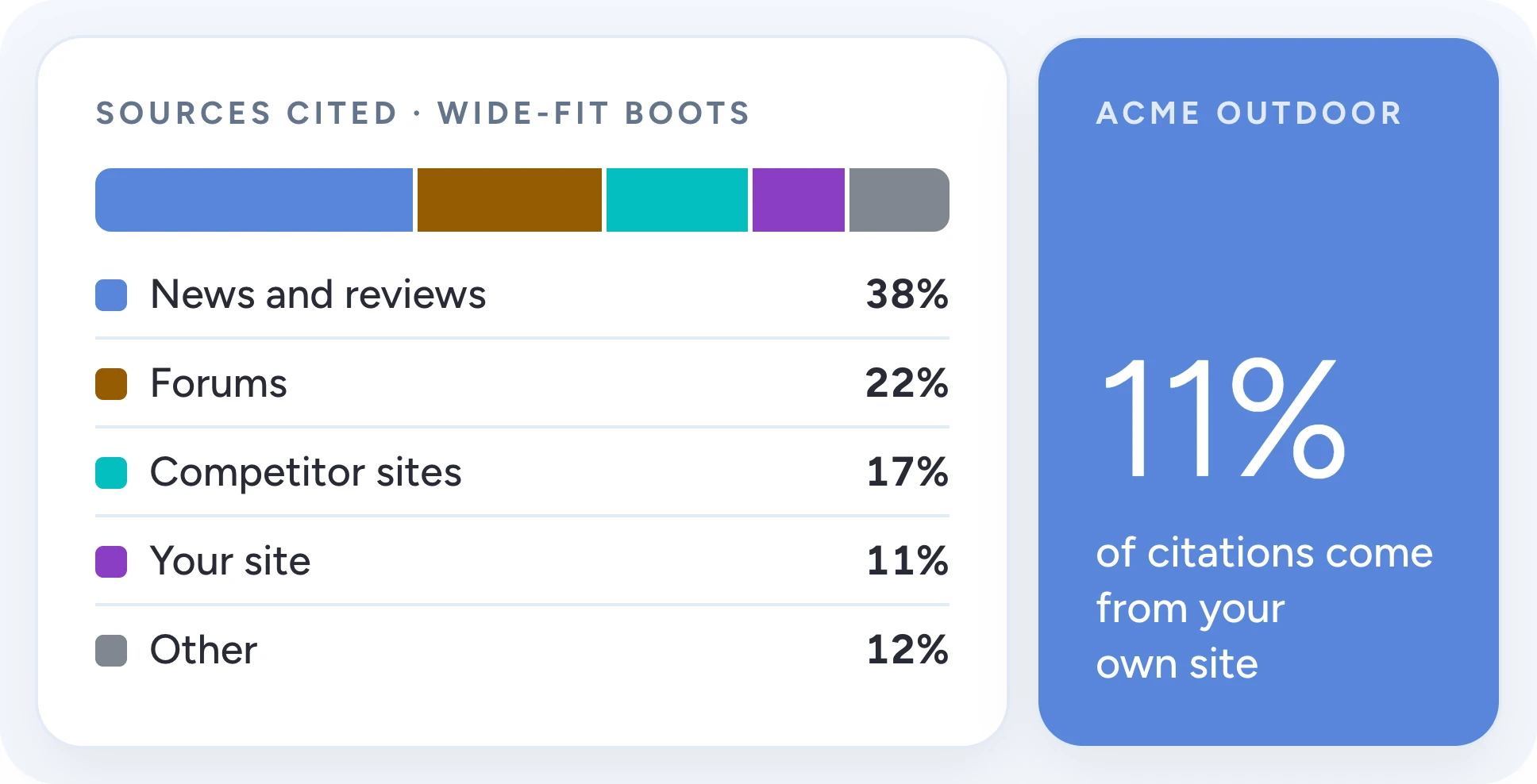
That's how PR and SEO split the work. PR goes after the publishers AI already cites. SEO fixes the owned pages that should be in the mix and aren't. Track the mix over time and you'll see whether that work changed who AI listens to. More on connecting earned media to AI visibility.
"Best for" shortlists
Buyers rarely ask AI for a single answer. They ask for options, and AI hands back a shortlist with a label next to each name. In our example, SummitGear is "best overall," Acme's Ridgeline 2 is "best for wide feet," and TrailForge is "best on a budget."
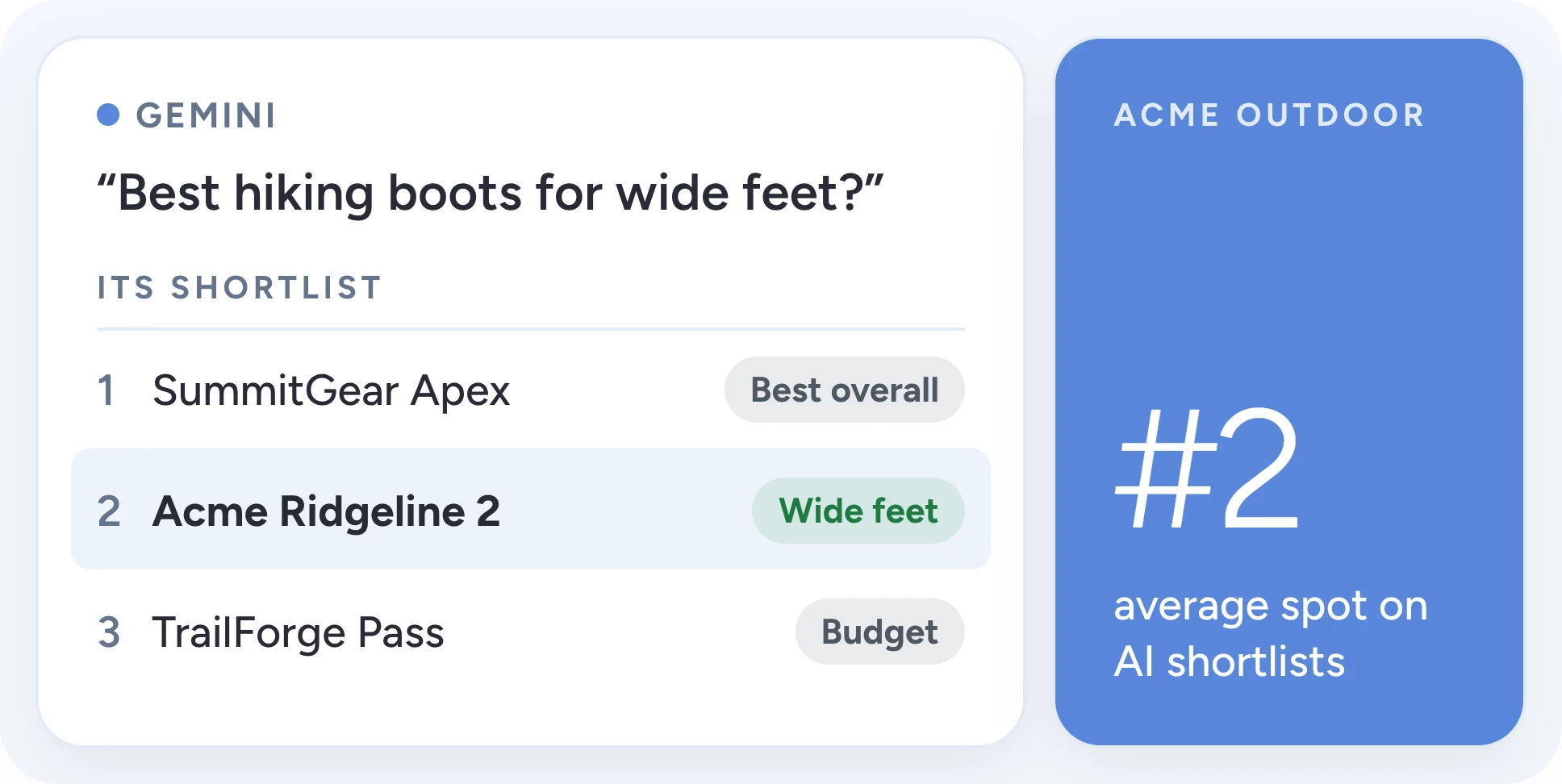
Making the list is step one. The label decides who picks you. "Best for wide feet" is great if wide feet are your market. It's a problem if you want the "best overall" spot, because AI has already filed you under a niche.
So this answers two questions: how often do you land on the shortlist, and what does AI say you're best for? Compare that with the position you want to own. If there's a gap, the fix lives in the reviews, comparisons, and product pages AI reads when it builds the list.
Negative messages
Some claims hurt every time AI repeats them. Acme's boots "run narrow." They're "pricey for what you get." Or the worst kind, a false one: the Ridgeline 2 has been "discontinued," even though it's still on the shelf.
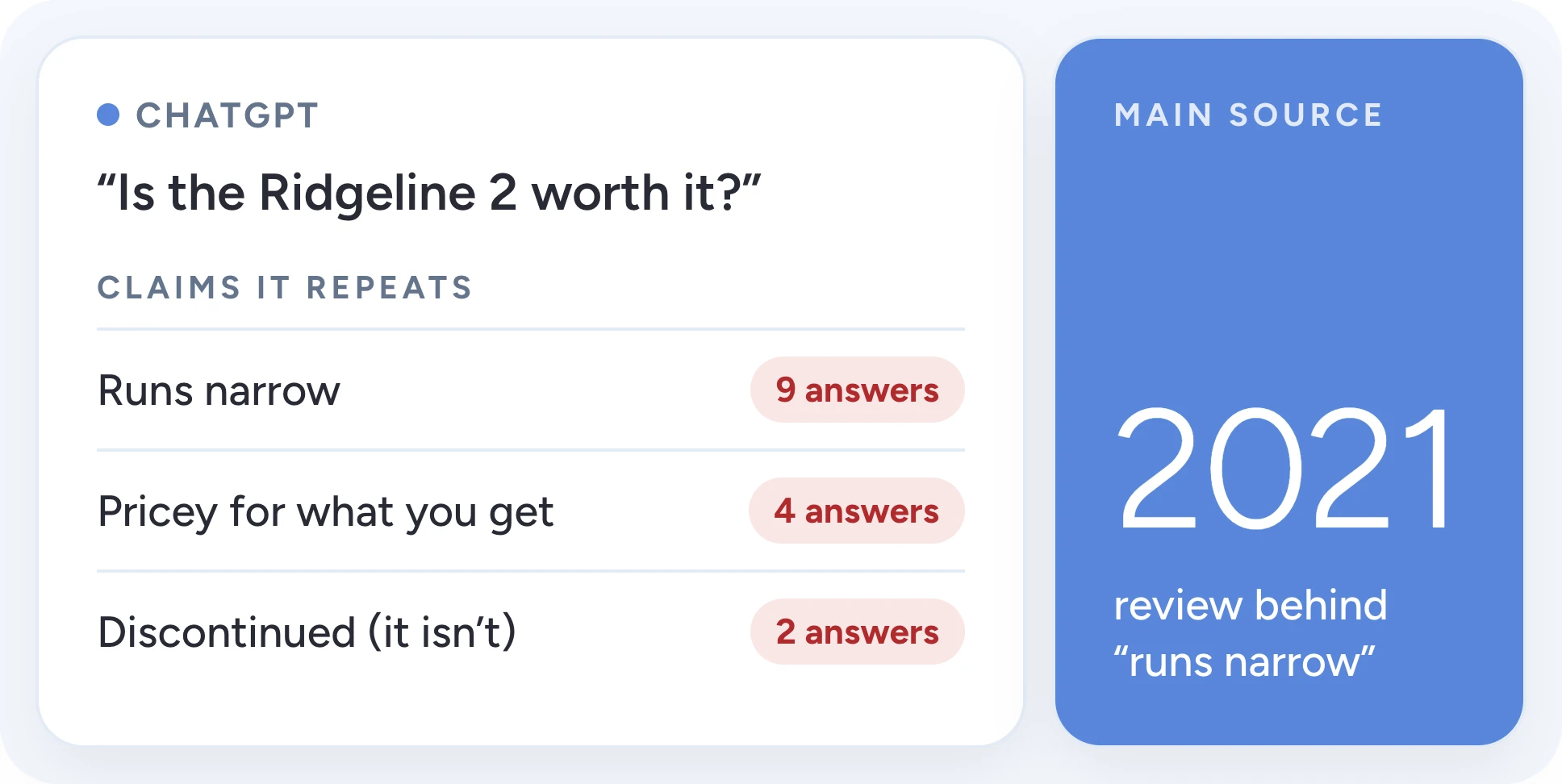
A good platform tracks the claims you don't want repeated, not only the ones you do. It answers three questions. Which negative claims show up? How often? Which sources feed them? A complaint in one old forum thread is a very different problem from a line in a review that AI cites every day. In this example, most of the "runs narrow" answers trace back to a single review from 2021.
Once you know the source, you know the fix. Ask the publisher to correct the record, update your own pages so the right facts are easy to find, and watch whether the claim fades. See how to monitor what AI says about your brand.
Wrong-domain consultations
Sometimes AI skips the open web and goes straight to one site to look your brand up. The question is which site. If it reads acmeoutdoor.example, great. If it reads acme-outdoors.example, a lookalike you don't own, then your brand facts are coming from someone else.

Our research found ChatGPT usually knows your domain. Mix-ups showed up in comparison questions and with brands that share a name with another company, and old domains stuck around long after a move. Usually isn't always, though. One wrong lookup can send a buyer, and your reputation, to a site you don't control.
So watch which sites AI consults when it looks you up. Investigate any address that looks like yours but isn't, then fix the places the model learned it from. Here's how to see which sites AI trusts and fix the ones it gets wrong.
Executive visibility
Reporters, investors, and job candidates ask AI about your leaders by name. The answer comes from whatever the model can find. Sometimes that's accurate. Sometimes it's an old title, a mixed-up bio, or almost nothing at all.
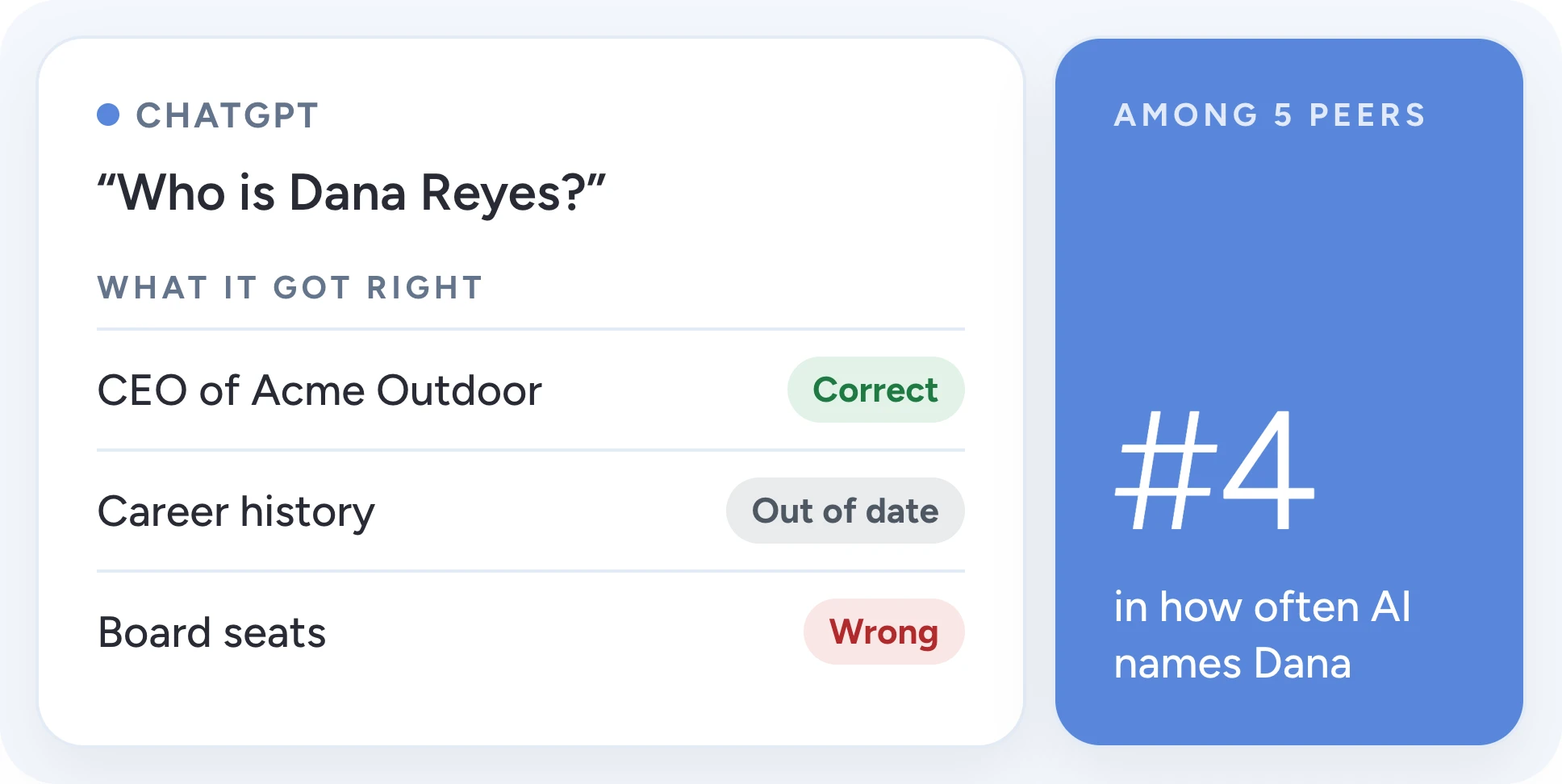
Track each executive as their own subject. Measure how accurately AI describes them, then compare them with real peers, like the CEOs at SummitGear and Peakline, rather than with rival companies. In our example, ChatGPT gets Acme CEO Dana Reyes's title right but has an out-of-date career history and the wrong board seats. A brand can do well in AI answers while its CEO barely registers.
That gives comms a plan. Fill the gaps in bios and profiles, place bylines and interviews where AI reads, and watch accuracy improve. The full workflow is in how to build executive visibility in AI answers.
Category visibility
Plenty of buyers start without a brand in mind. They ask "what are the best hiking boot brands?" or "who makes good boots for long trails?" Category visibility tracks which brands AI names for those unbranded questions, and how that ranking moves over time.
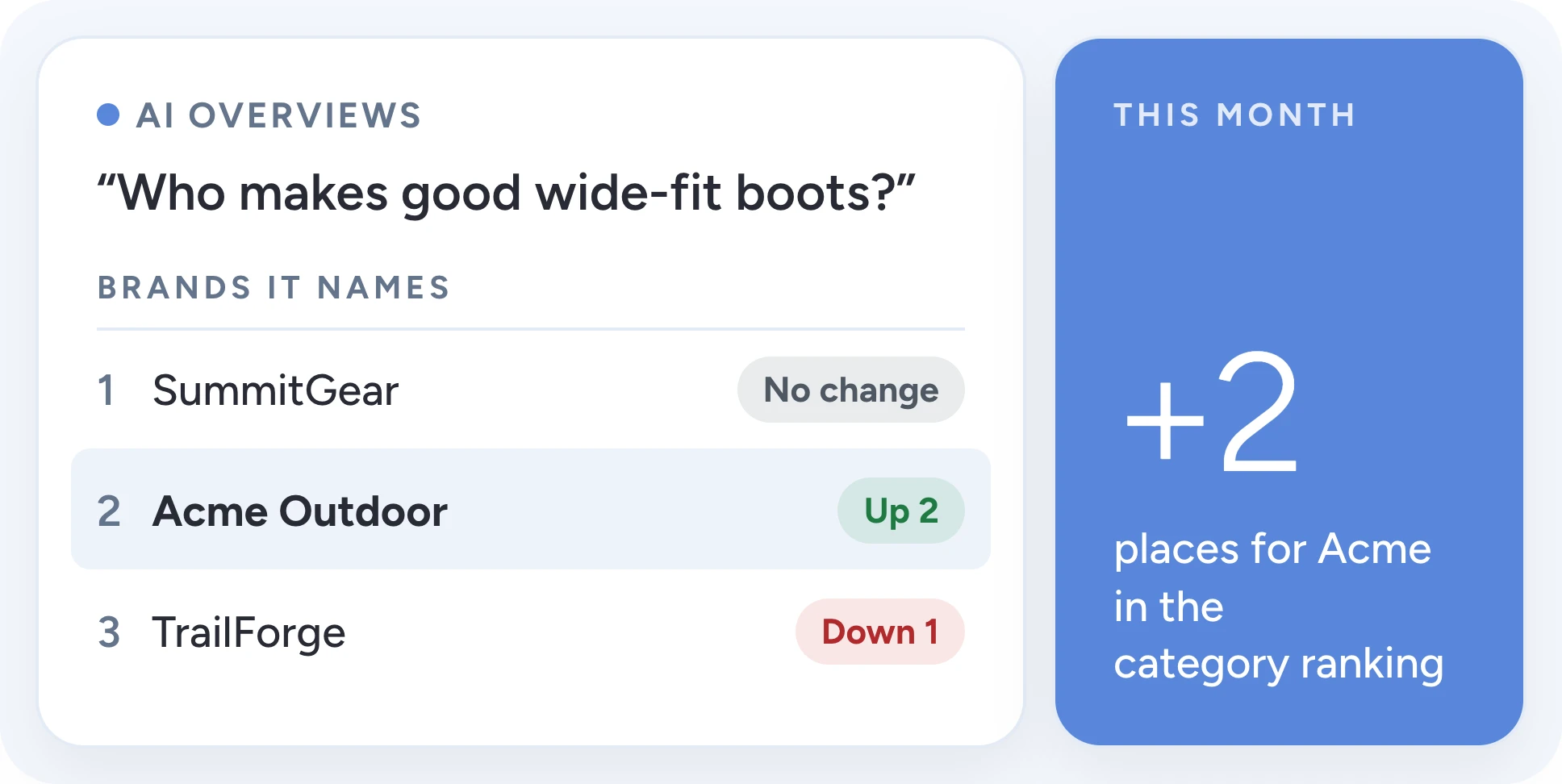
Think of it as the market map before anyone types your name. In this example, Acme climbed two places this month to sit right behind SummitGear. The gap to the top spot is where new customers still slip away, and the ranking shows whether your work is closing it. It also flags rising rivals early, since AI often starts naming a new brand before your team has noticed it.
Track the category every day and read the ranking the way you'd read market share. Start with how to map a category in AI answers.
Crisis watch
When a bad story breaks, people don't only read the news. They ask AI about it. For days or weeks, answers about your brand may lead with the story, even for questions that have nothing to do with it.
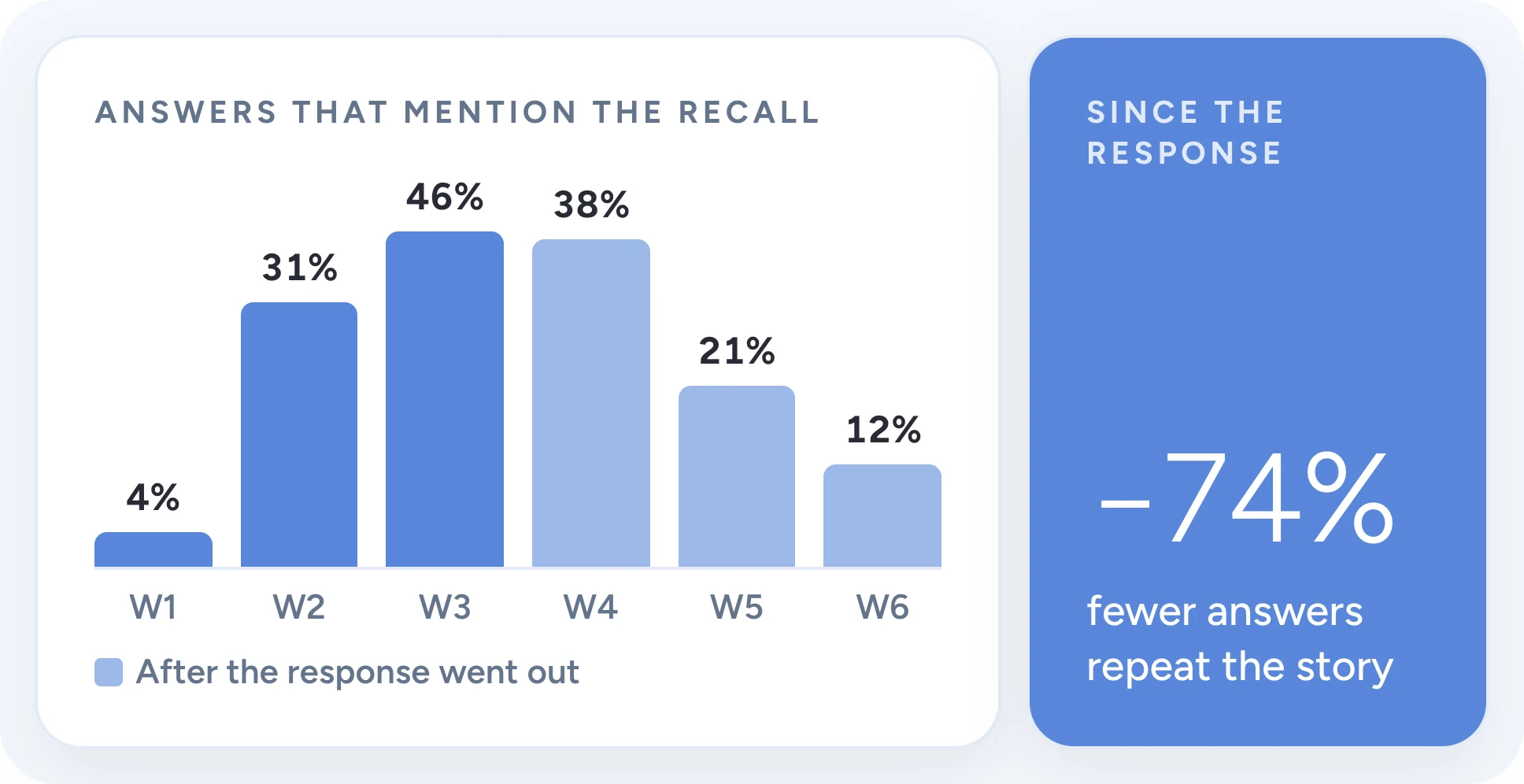
Crisis watch measures three things. How much of AI's answers repeat the negative story? How fast does that share rise and fade? Is your response landing? In our example, a product recall shows up in a growing share of answers for three weeks, then starts to fade once Acme's response goes out. If your statement and the follow-up coverage start showing up in answers, it's working. If the original story keeps winning, you know which sources to go after next.
It turns a vague worry into a number comms can report up every day. The full playbook is in how to run crisis communications when AI is repeating the story.
Rebrands and M&A
You can change your name on your website in an afternoon. AI keeps using the old one for months, because it reads a web that hasn't caught up yet. Say Acme Outdoor used to be Trailmark Co. Ask who makes the Ridgeline 2, and some answers still say Trailmark, because plenty of the sources AI cites still do. Mergers work the same way: AI keeps answering with the old owner until the web catches up.
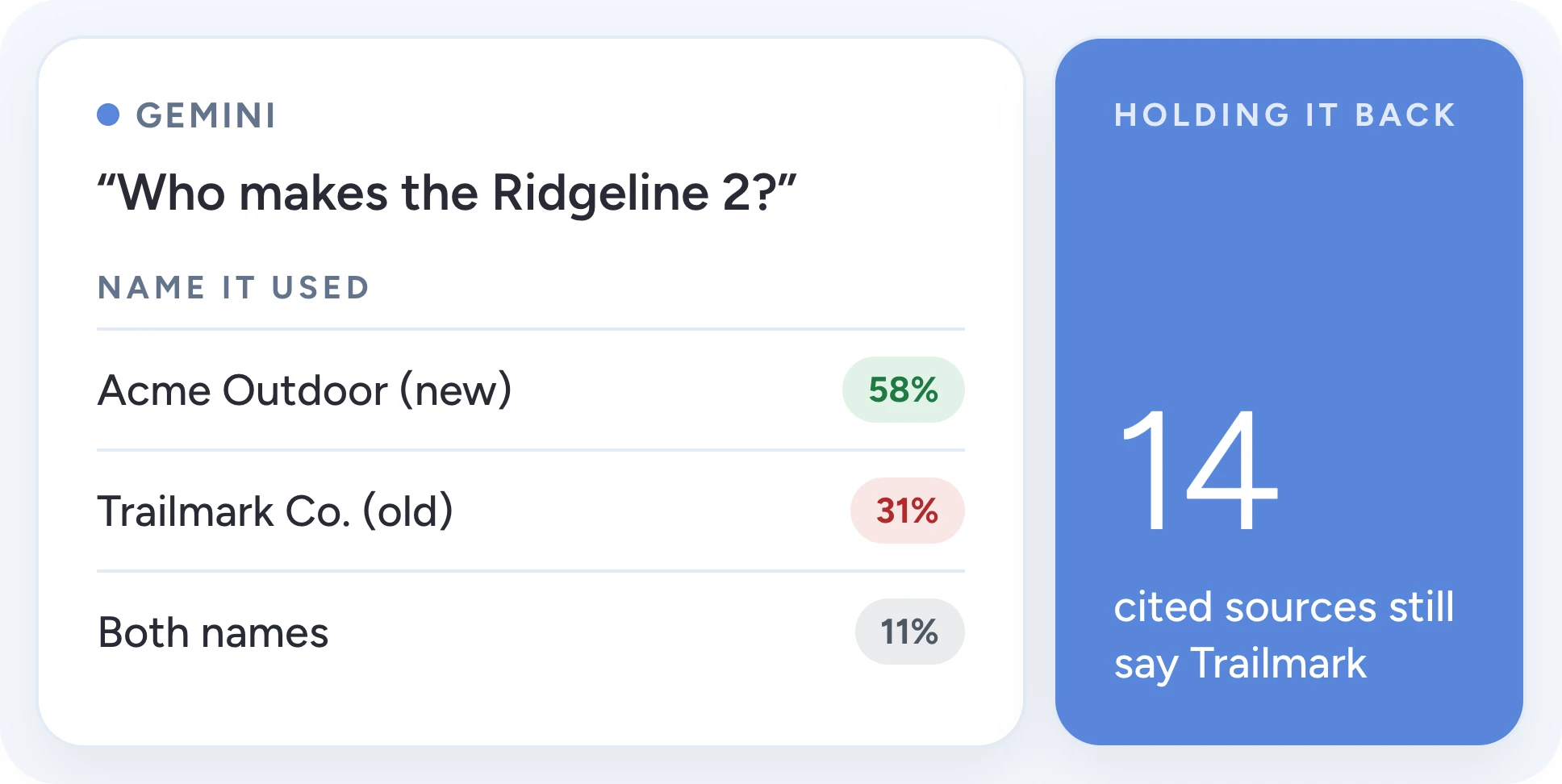
Track the old and new names side by side. The question is simple: is AI using the new name or owner yet, and which sources are holding it back? Usually it's old roundups, directories, and profiles that still tell the old story.
Once you know which ones, fix them one at a time and watch the old name fade while the new one climbs. There's a guide for each case: tracking a rebrand in AI answers and tracking AI visibility through a merger.
Measure AI answers like the channel they are
Prompt tracking is where AI visibility starts. Mentions and share of voice tell you where you stand, and you should keep watching them. The signals behind those numbers are where the work happens. Grounding searches and source mix tell SEO and PR where to spend. Shortlists and negative messages show how AI positions you. Wrong domains, crisis watch, and rebrand tracking catch risks early. Executive and category tracking widen the view.
You'd never judge paid search on impressions alone. AI answers deserve the same treatment. If you're building the reporting side, start with how to measure AI as a marketing channel. To see where your brand stands today, run a free AI Visibility Report.