How to Write a Press Release ChatGPT Will Cite (2026 Guide)

Jim Wrubel
6/29/2026
To optimize content for AI citations, write it the way ChatGPT actually reads a page: lead with a clear, self-contained answer, break the page into short passages of about 200 tokens, and put the specific facts, names, numbers, and dates up top where they match the question. That is the core 2026 SEO strategy for earning AI answers, and you can verify a draft against it before you publish using AI visibility data from the Spyglasses AI Search Citation Optimizer.
ChatGPT doesn't answer research questions from memory. It searches the web, ranks the results, reads the top pages, splits each one into ~200-token passages, scores them, and builds its answer from the passages it trusts. Your page has to clear that whole gauntlet. This guide walks you through eight steps to write a release that does, then shows you how to check the draft before you hit publish.
Key takeaways
- ChatGPT cites passages, not whole pages. It reads in windows of about 200 tokens and lifts the strongest one.
- The passage it lifts leads with the answer. It's packed with specific names, numbers, and dates. Vague or buried copy gets passed over.
- No search, no citation. ChatGPT answers broad how-to questions from memory. The "best of," "vs," product-comparison, and category-research questions send it searching, and those are the ones you can win.
- Check it before you publish. The Spyglasses AI Search Citation Optimizer scores a draft against the eight gates, marks each green, yellow, or red, and rewrites the weak spots, with unlimited re-scoring.
Contents
- Why ChatGPT cites some pages and skips others
- Eight steps to a citable press release
- The catch most guides skip
- Test the draft before you publish
- Frequently asked questions
Why ChatGPT cites some pages and skips others
ChatGPT cites a page when that page ranks in the top results, breaks into clean ~200-token passages, matches what the question means, and leads with its answer. For research questions it uses retrieval-augmented generation: it runs a search, ranks the results, grabs the top pages, splits each into passages of roughly 200 tokens, scores those passages for relevance, reads the strongest one closely, then builds its answer from the passages it trusts. Every step is a filter.
Most of those steps follow published, repeatable rules, so you can write for them instead of guessing. A release that ranks in the top 30, chunks into clean passages, and leads with its answer has a real shot at getting quoted. One that buries the news under adjectives doesn't.
Your single best passage does the heavy lifting. Your strongest lines have to beat the other pages competing for the same spot, not just sit on your page.
Eight steps to a citable press release
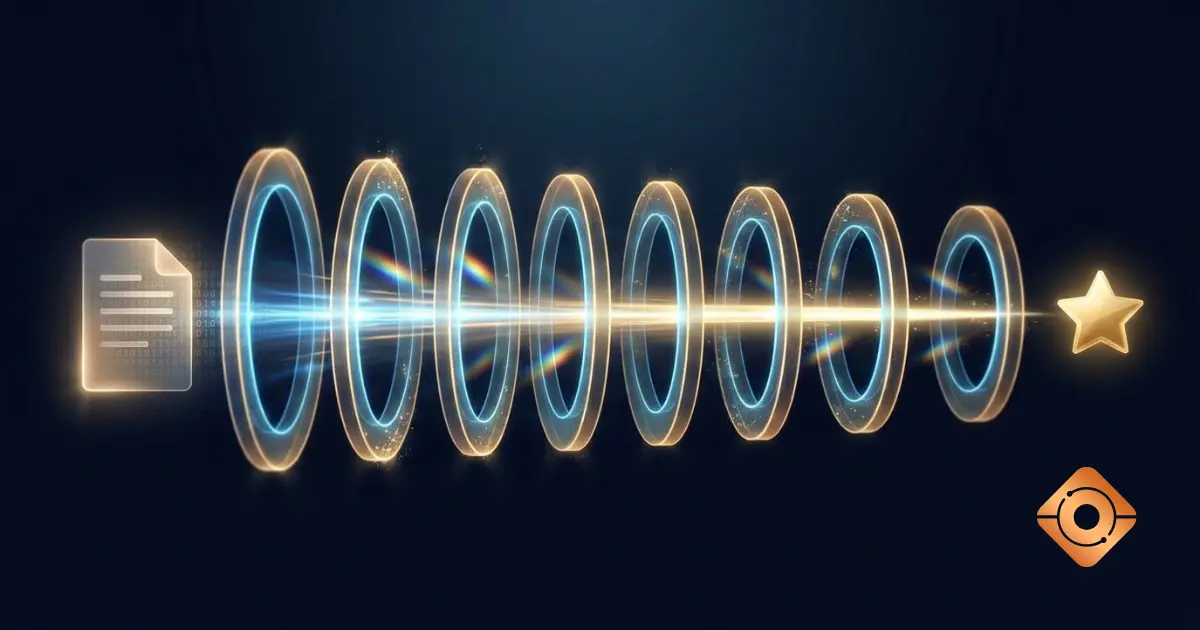
Work through these in order. Each one targets a specific gate in the pipeline.
- Put the news and the keyword in the headline. ChatGPT reads the headline first, so lead with the company, what actually happened, and the exact phrase someone would search. Save the clever wordplay for somewhere else.
- Front-load the lead. Your first sentence needs to stand on its own: who did what, when, where, and why, with the company named right there. ChatGPT lifts the top passage, so the whole claim belongs in the opening paragraph, not buried three down.
- Add three to five Quick Facts. A short "Quick Facts" or "Key Takeaways" block hands the model clean, liftable lines. Keep it to one self-contained fact per bullet, each with a number, a date, or a specific name.
- Make every quote count. Swap "we're thrilled" for a quote that says something concrete and names the company. A definite quote can drop straight into an answer. An excited one can't.
- Keep your boilerplate consistent. Your "About" paragraph should define the company in its first sentence: what it is, what it does, who it's for, and where it operates. Use the same sentence every time, so the model keeps seeing the same description and learns to trust it.
- Use real data, not adjectives. Numbers, dates, and percentages are citable. "Market-leading" and "best-in-class" aren't, and they get skipped. If you can't back up a superlative, cut it, and name the partners, customers, figures, and dates instead.
- Keep sentences short and skip the em dashes. Aim for eight to fifteen words, in active voice. Short passages chunk cleanly. Long, unbroken blocks get split mid-thought, and a fragment reads as out of context.
- Add structured data. Drop NewsArticle and Organization schema onto the page, plus FAQPage schema if you've got a Q&A section. It won't guarantee a citation, but it helps machines understand what your page is about.
The catch most guides skip
The question has to trigger a search. ChatGPT only cites a source when it actually goes looking for one. Plenty of questions, especially broad how-to ones, it answers straight from memory, with no search and no citation. When that happens, there's no citation to win, no matter how good your release is.
The releases that get cited show up on questions where ChatGPT needs current or specific information: product comparisons, "best of" and "vs" searches, category research, and news about what's new. So do both. Write the release to be citable, and point it at the real questions your buyers ask, not just generic how-to phrasing.
Test the draft before you publish
You don't have to guess whether a draft clears these bars. The Spyglasses AI Search Citation Optimizer scores it against the eight gates ChatGPT runs between a question and a citation. It marks each gate green, yellow, or red, tells you what to fix, and rewrites the weak passages for you, with unlimited re-scoring until the draft's ready. Run it on the Spyglasses site, or as an MCP connector right inside AI assistants like Claude Cowork, Claude Code, and OpenAI Codex.
It comes down to this: stop publishing releases and hoping AI notices. Write for the pipeline, test the draft, and ship the version that clears the gates.
Frequently asked questions
How do I optimize content for AI citations?
Write it the way ChatGPT reads a page. Lead with a clear, self-contained answer in the first sentence or two, pack it with specific names, numbers, and dates, break the page into clean ~200-token passages, and add Article or NewsArticle plus FAQPage schema. Then point the page at questions ChatGPT actually searches for, like "best of," "vs," and product comparisons.
Why does ChatGPT ignore some press releases?
Usually because the release buries its news, reads like vague marketing copy, or targets a question ChatGPT just answers from memory. No search means no citation. It can also rank too low to make it into the pages ChatGPT fetches and reranks.
How long should a citable press release be?
Long enough to state the facts, short enough to stay tight. Lead with the key claim, then back it up. Wire services often cap releases around 1,500 words, which is plenty of room.
What's the best way to check a release before publishing?
Score it against the retrieval pipeline. The Spyglasses AI Search Citation Optimizer flags each of the eight gates and rewrites the weak passages, so you can fix the problems before the release goes out.
Does structured data help AI cite a press release?
It helps machines parse your page, which supports retrieval. Add NewsArticle and Organization schema, plus FAQPage schema if you've got a Q&A section. Think of it as a helpful nudge, not a guarantee.
Why this matters
Most brands publish into AI search blind. They can't see which questions trigger a search, which passages get lifted, or why a competitor gets cited when they don't. Spyglasses is an AI visibility platform that closes that gap. It scores and optimizes your content for the same algorithms AI uses to find, evaluate, and cite web pages, then turns what it learns into a 2026 content strategy you can act on. Score a draft against the eight gates, fix the weak passages, and ship the version ChatGPT can quote. Learn more at spyglasses.io.